Happy Monday, creative family, and welcome to Logiaweb Weekly.
This week’s design intelligence briefing reveals:
🧪 What I'm Building: Behind the Scenes
🚨 Big News: Mango AI is coming in 2026
🤖 Design Inspiration: Winning static ads
🛠️ Tutorial of the Week: Clone any winning ad for your brand in 2 minutes
💡 Prompt of the Week: Elegant animation using Luma Labs Dream Machine

WHAT I’M BUILDING
Behind the Scenes
This week was a bit different. I took time off for Christmas, went back to France, and spent quality time with my family. It had been a long time since I’d truly taken a full week like this, and it felt really needed.
That said, I didn’t completely disconnect. I spent some quiet moments working on more personal projects - thinking, planning, and creating without pressure. One of the big things was preparing the keynote I’ll give in Dubai at the beginning of January, during the 1Billion Summit. It’s one of the biggest conferences around content creation, tech, and the economy, and I’ll be talking about how to build an AI startup from scratch.
I’m genuinely excited about this one. Rest, perspective, and big things ahead.

BIG NEWS
Meta just announced they're building Mango, a new multimodal AI model designed to generate high quality images and videos. It could reshape how we create visual content for our clients.
Mango isn't just another image generator. It's Meta's move to compete with Google and OpenAI on visuals but with a twist. They're going deep on video gen and editing not just static content.
This is alot like Midjourney being mixed with Runway, but built straight into Instagram and Threads. Now the entire creative flow lives inside Meta instead of jumping between apps.
If you're already using AI for mockups or social content, this is the evolution. And it's coming in 2026.

Why it matters
Meta is betting that designers want to generate and iterate complex visual assets without jumping between five different tools. Image to video. Video edits. Brand consistency across outputs all in one place.
Between stitching together Midjourney for images, Runway for video and CapCut or Premiere for edits, Meta could collapse that entire workflow into a single creative engine.
If they integrate it into their platforms, you could be generating hero sections, animated social ads and brand videos right were your prospects already live.
Meta is positioning Mango to become the backbone of scaled visual content for designers.

What to do now
You have a window before 2026 to get ahead. Audit your current image and video workflows. Where are you losing time? Where does quality drop between tools? Start marking those friction points.
Experiment with everything though: Meta AI, Midjourney, Runway, Pika. Build muscle memory with multimodal stuff so when Mango drops, you’re not starting from zero.
By the time Mango launches, you'll already be the one clients trust to deliver faster and better.
The future of design is fewer tools that do more. Mango might just be the one that makes that real.
DESIGN INSPIRATION
Winning static ads
Tool Used: Midjourney

PROMPT: Create a high-end static digital advertisement for a health supplement product with a clean white background and vibrant green accents. Feature the product jar prominently with realistic lighting, crisp shadows, and a fresh splash effect to add energy while keeping a polished, commercial look. Surround the product with natural ingredients like leafy greens, citrus slices, and berries arranged in a balanced, editorial layout. Include bold, modern typography with a strong headline, short benefit callouts using minimal icons, and a clear call-to-action button. The final image should look premium, realistic, and suitable for social media or website advertising, not illustrative or abstract.Tool Used: Runway

PROMPT: Create a premium static advertisement featuring three rugged sports smartwatches displayed front-facing against a wide, realistic outdoor mountain landscape. Place the central watch as the hero with a larger scale, sharp screen details, and clear battery or performance UI, while two alternate color variants flank it symmetrically. Use natural daylight lighting, high contrast, and crisp reflections to give the watches a realistic, high-end commercial look. Add clean, bold headline typography at the top and a short feature tagline at the bottom, keeping the layout minimal and balanced. The final image should look like a professional brand campaign asset suitable for web, social media, or print advertising.Tool Used: OpenAI Image Gen (ChatGPT)

PROMPT: Create a premium static advertisement with a clean vertical split design comparing a filtered showerhead on the left and an unfiltered showerhead on the right. Show the left side with bright, soft lighting, a polished modern showerhead, and a calm, clean aesthetic, while the right side appears dull, gray, and worn with harsher lighting. Place the product centered and perfectly aligned so each half clearly contrasts condition, material quality, and finish. Add minimal, modern typography with a bold headline at the top and short benefit callouts on each side using rounded labels. The final image should look like a professional skincare or wellness brand campaign, ultra-sharp, realistic, and optimized for digital advertising.TUTORIAL OF THE WEEK
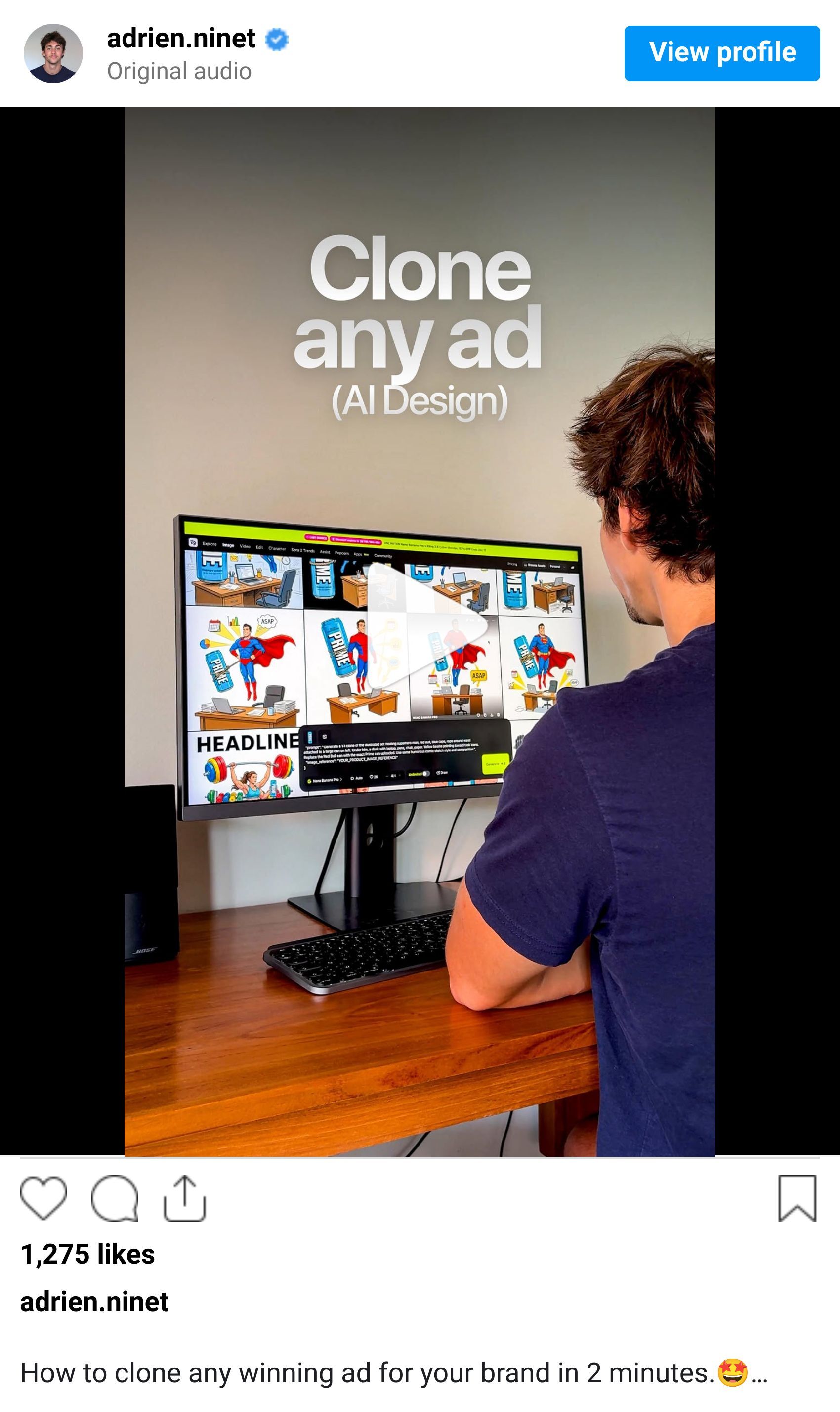
No more spending hours brainstorming ad concepts from scratch. This workflow steals what's already working and adapts it to your products in minutes.
Step 1: Find Winning Ads
Go to the Meta Ad Library (it's free and public).
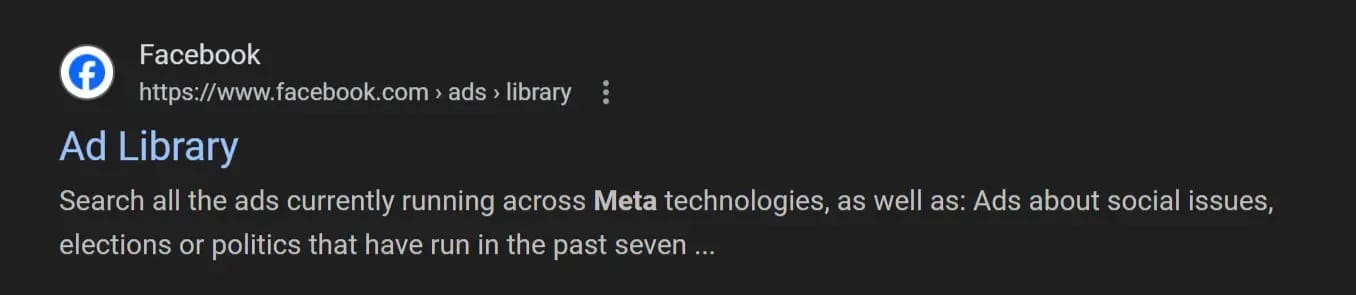
Search for keywords in your industry. Think broad terms like "fitness app" or "skincare."


Browse through your competitors' ads and download the ones that feel like winners.

TIP: Look for ads with strong visuals, clear hooks, and simple layouts. Those are the ones that convert.
Step 2: Analyze with ChatGPT
Upload the ad image to ChatGPT.
Use this exact prompt: "Analyze the psychology + create 10 JSON prompts that clone this image one on one for my products."
Hit enter and let ChatGPT break down why the ad works and generate 10 optimized prompts you can use.
The AI will pull out the composition, color psychology, focal points and emotional triggers. Then it repackages them into ready to use prompts.

Step 3: Generate Your Version
Copy one of the JSON prompts ChatGPT just gave you.

Head over to Higgsfield (it's built for product based image generation).
Upload your product photo, paste the prompt, and click generate.
You now have a strong ad fully optimized to perform, styled after something that's already proven to work.

Why this actually works
You're not guessing. You're reverse engineering ads that are already getting attention and converting. Then you're using AI to adapt the structure, psychology and style to your brand in minutes.
No more staring at a blank canvas wondering if your concept will flop.
PROMPT OF THE WEEK

PROMPT: Create a high-end 3D animated GIF featuring a luxury perfume bottle made of clear glass filled with warm amber liquid, precisely matching the product’s shape, proportions, and premium materials. Animate the bottle with a slow, elegant rotation or gentle floating motion to showcase glass thickness, liquid depth, and metallic cap reflections. Transition smoothly into a refined brand scene where the perfume sits within a soft, editorial environment featuring flowing fabric textures, delicate florals, and complementary product variants arranged tastefully in the background. Use soft studio lighting, realistic refractions, subtle shadows, and shallow depth-of-field to maintain a cinematic, luxury aesthetic throughout the animation. The background should remain minimal, warm, and cohesive, with seamless looping motion suitable for a high-end fragrance website or digital ad campaign.TOOL OF THE WEEK
Tool Name: Bloom
Bloom AI is an AI tool that automatically scans your website to extract its visual and design identity and turns it into a cohesive brand system. Bloom analyzes your site’s colors, typography, logos, imagery, and tone to generate ready-to-use brand assets like logos, templates, and social graphics. Branding takes time. Creating consistent, professional assets from scratch wastes even more
How I’d use it
As a graphic designer, I’d use Bloom to instantly turn a client’s website into a usable brand system. I’d drop in their URL, let Bloom analyze their colors, typography, imagery, and overall visual identity, and get on brand starter assets in minutes without digging through style guides or asking for missing files.
From there, I’d generate custom assets just by describing what I need: social posts, ads, email headers, or mockups, all automatically consistent with the client’s brand. This removes the guesswork from brand alignment, speeds up production, and helps me deliver polished visuals faster.
That’s it for this week, but I want to make each edition even better.
👉 Got 30 seconds?
Fill out this quick survey and tell me what you'd love to see next. Your feedback directly shapes the next drop.
💌 Know a designer who should be using AI smarter?
Forward them this email. Or just send them to logiaweb.com/weekly to join.
See you next Monday,
— Adrien


Adrien Ninet
